Refrigerator troubleshooting
Whirlpool Refrigerator Problems: 10 Common Issues, Ice Maker & PO Alerts
What common Whirlpool refrigerator symptoms and display codes mean, what you can safely check, and when to schedule a diagnosis.
Quick Answer
Start by separating a cooling problem from an ice or water problem. A Whirlpool refrigerator with lights on may have cooling switched off, blocked airflow or a component fault. A PO alert records a power interruption on supported models; it does not by itself mean the control board failed. Measure both compartments before resetting anything.
What To Check Before Replacing a Part
Write down the complete model number, photograph the display and measure both compartments with appliance thermometers. Note where frost, water or noise first appears. The same symptom can come from more than one part.
Whirlpool Refrigerator Symptom Checker
Start with the symptom you can observe.
| Symptom | Safe first check | When to get help |
|---|---|---|
| Whirlpool refrigerator is not cooling in either compartment | Check Cooling Off and both temperatures. | Check fans, controls and sealed-system operation. |
| Freezer works but the refrigerator is warm | Clear visible vents and photograph rear-wall frost. | Test fan, damper and defrost operation. |
| Ice maker is not making ice | Check ice setting, water supply and freezer temperature. | Trace fill and harvest operation. |
| Ice is in the bin but will not dispense | Check the lock and removable bin seating. | Inspect auger drive, coupling and chute. |
| Water flow slowed after a filter change | Match and reseat the specified filter. | Compare supply pressure and flow through the appliance. |
| Water collects under drawers or on the floor | Record the first wet spot and close a leaking supply. | Trace internal water and defrost-drain paths. |
| Fan noise or frost returns behind the freezer panel | Check gasket contact and record the noise. | Find the cause of recurring frost before replacing a fan. |
| Fresh food freezes near the air outlet | Move items away from outlets and measure shelves. | Check sensing and damper response. |
| PO alert appears after a power outage | Record the outage and check food temperature. | Investigate recurring unexplained power alerts. |
| Refrigerator runs for long periods after loading groceries | Check ventilation and recovery temperatures. | Diagnose continued warming under normal use. |
What Varies by Whirlpool Model
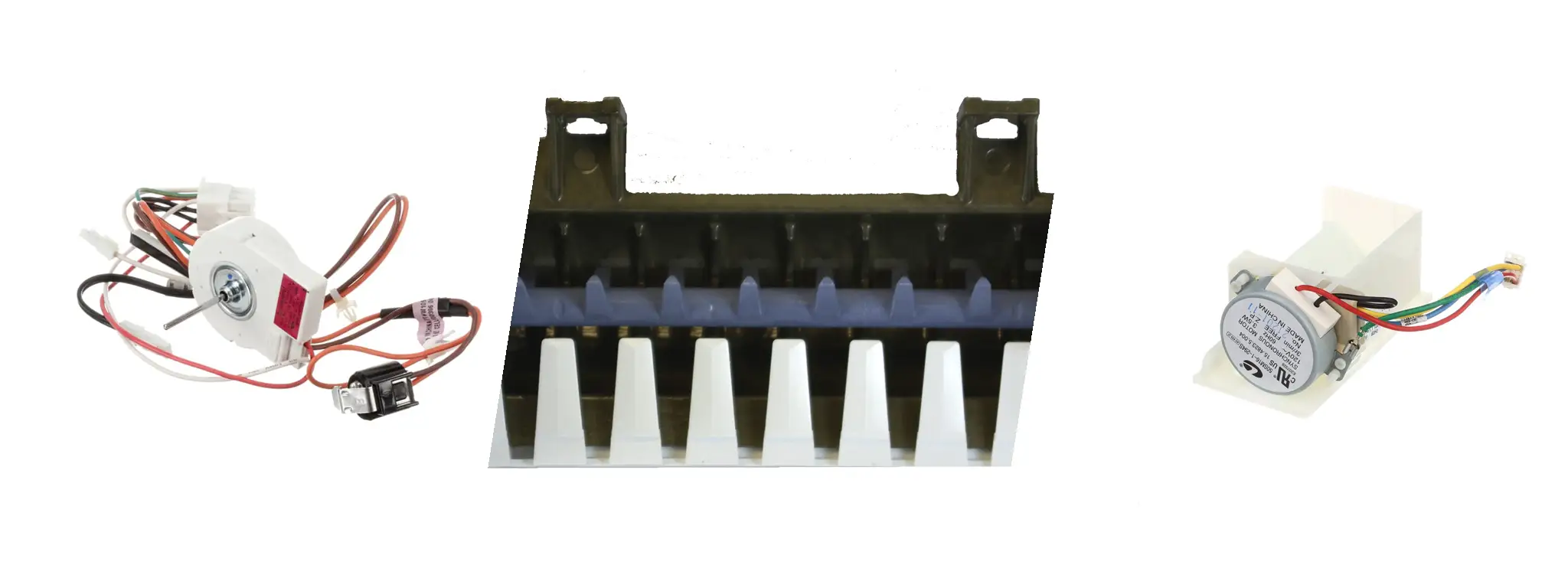
Whirlpool side-by-side, top-freezer and French-door refrigerators use different air paths, ice systems and controls. The illustrated WRF555SDFZ11 parts are examples, not a shopping list for every model. PO, Door Ajar and filter reminders are alerts; not every Whirlpool has an alphanumeric diagnostic display.
Technician Tip
Photograph the product label and include the suffix. A part number from a similar-looking refrigerator can still be wrong for your model.
10 Common Whirlpool Refrigerator Problems
1Whirlpool refrigerator is not cooling in either compartment
Check the outlet and controls without moving a heavy appliance or opening electrical covers. Confirm Cooling Off is not active, then read two appliance thermometers. The temperature selected on the display is a target, not proof that food is cold. If both compartments continue warming, the fan, starting controls and sealed system need separate checks. A running light cannot identify a failed compressor.
Safe to check yourself
Check Cooling Off and both temperatures.
Requires professional diagnosis
Check fans, controls and sealed-system operation.
2Freezer works but the refrigerator is warm
On designs that move freezer air into the fresh-food compartment, blocked vents, a failed evaporator fan or a stuck damper can interrupt circulation. Leave space around visible air outlets. Photograph frost on the freezer rear wall before it melts. The WRF555SDFZ11 example uses a fan assembly and an air damper; other Whirlpool platforms differ. Repeated defrosting without finding the cause only hides the symptom.
Safe to check yourself
Clear visible vents and photograph rear-wall frost.
Requires professional diagnosis
Test fan, damper and defrost operation.
3Ice maker is not making ice
Check that ice production is enabled and the freezer is cold enough to freeze food normally. Confirm the bin is seated and the water shutoff is open. A newly installed refrigerator needs time to stabilize and begin production; consult its manual before declaring a failure. If drinking water works but the ice mold never fills, the ice fill circuit still needs checking. Do not force the ejector fingers.
Safe to check yourself
Check ice setting, water supply and freezer temperature.
Requires professional diagnosis
Trace fill and harvest operation.
4Ice is in the bin but will not dispense
First separate production from delivery: a full bin means the ice maker has produced ice. Check the dispenser lock and reseat the removable bin as the manual describes. Discard loose clumps after removing the bin; keep fingers and tools out of the powered mechanism. A humming drive with no ice movement can involve the auger, coupling or a blockage rather than the ice maker itself.
Safe to check yourself
Check the lock and removable bin seating.
Requires professional diagnosis
Inspect auger drive, coupling and chute.
5Water flow slowed after a filter change
Confirm the replacement cartridge matches the full model and is seated correctly. Follow the model flushing instructions and inspect the accessible supply line for a kink. If ice production slowed at the same time, a shared water restriction is worth checking before buying an ice maker. A technician can distinguish low household supply pressure from a restricted filter housing or inlet valve.
Safe to check yourself
Match and reseat the specified filter.
Requires professional diagnosis
Compare supply pressure and flow through the appliance.
6Water collects under drawers or on the floor
Record the first wet spot and whether it follows dispensing or ice production. A visible external supply leak calls for closing the safely accessible water shutoff. Water inside the cabinet may follow a different route, including the defrost drain. Do not pour chemicals into hidden drains or remove a frozen panel. Diagnosis should trace the water path rather than replace unrelated cooling parts.
Safe to check yourself
Record the first wet spot and close a leaking supply.
Requires professional diagnosis
Trace internal water and defrost-drain paths.
7Fan noise or frost returns behind the freezer panel
A fan rubbing against ice can sound like a worn motor even when the motor still runs. Note whether the noise changes when a door opens. Check that the gasket touches the cabinet and packages do not hold the drawer open. If frost returns across the rear panel, a technician should inspect airflow and the defrost circuit. Avoid sharp tools, hair dryers and forced panel removal.
Safe to check yourself
Check gasket contact and record the noise.
Requires professional diagnosis
Find the cause of recurring frost before replacing a fan.
8Fresh food freezes near the air outlet
Move produce and bottles away from the outlet and check the recommended setting in the manual. Compare readings on more than one shelf over a normal operating period with the doors closed. One item against a vent does not prove a bad thermostat. Persistent freezing across the compartment can call for checking the sensor, damper and control response.
Safe to check yourself
Move items away from outlets and measure shelves.
Requires professional diagnosis
Check sensing and damper response.
9PO alert appears after a power outage
Photograph the message, check how long power was off and assess the actual food temperature. Acknowledging the display does not restore food safety or prove cooling has recovered. Use the exact model procedure, since controls vary. If the alert returns without a known outage, note other appliances losing power and have the supply and refrigerator checked rather than repeatedly clearing the message.
Safe to check yourself
Record the outage and check food temperature.
Requires professional diagnosis
Investigate recurring unexplained power alerts.
10Refrigerator runs for long periods after loading groceries
Warm groceries, repeated door opening and a recent restart can extend running time. Keep the installation clearances specified by Whirlpool and avoid blocking cabinet vents. Judge recovery by measured temperature, not sound alone. If food stays warm, there is recurring frost or the unit never reaches its setting under normal use, arrange diagnosis instead of simply turning the control colder.
Safe to check yourself
Check ventilation and recovery temperatures.
Requires professional diagnosis
Diagnose continued warming under normal use.
Whirlpool Refrigerator Repair Cost Factors
| Repair area | What to ask about |
|---|---|
| Airflow and door sealing | Which part is blocked, worn or electrically faulty? |
| Ice and water | Is the restriction in the supply, filter, valve or ice maker? |
| Compressor or sealed system | Does the model warranty cover parts or labor? |
Ask for a written quote after diagnosis, including parts and labor.
Whirlpool Refrigerator Error Code Table
| Code | What it means | What to check or report |
|---|---|---|
| PO | Power-outage alert on supported controls. | Check food and actual temperatures. Acknowledge the alert using your model instructions; continuing warming needs diagnosis. |
| Cooling Off | Cooling is disabled; lights may still work. | Use the exact manual to enable cooling. Button combinations differ. |
| Door Ajar | A door has remained open on models with this alert. | Check food packages, drawer alignment and gasket contact. |
| Replace Filter | Maintenance reminder on applicable models. | Verify the correct filter and reset only the filter reminder after replacement. This is not a cooling fault code. |
How To Reset a Whirlpool Refrigerator Safely
- Photograph the code and note the current temperatures.
- Find the reset or alarm acknowledgment procedure in your exact model manual.
- If the code returns or temperatures continue to rise, arrange diagnosis.
Maintenance Checklist
- Keep visible cabinet air vents clear.
- Check the door gaskets and drawer closure.
- Use the filter specified by the manufacturer and follow its replacement instructions.
- Follow model-specific instructions for accessible condenser cleaning. Leave electrical panels and refrigerant work to a technician.
Is a Whirlpool Refrigerator Worth Repairing?
| Factor | What to compare |
|---|---|
| Quote and warranty | Diagnosis, parts, labor and remaining manufacturer coverage |
| Age and condition | Prior repairs, seals, cabinet and other symptoms |
| Replacement | Like-for-like price, fit, delivery and installation |
Whirlpool Refrigerator Repair Across Tampa Bay
See Whirlpool appliance repair and our Tampa Bay refrigerator repair service. Share your ZIP code and model when booking to check availability.
Whirlpool Refrigerator Troubleshooting FAQ
Why is my Whirlpool refrigerator warm but the freezer is cold?
An airflow restriction, evaporator fan, damper or defrost problem can leave the fresh-food compartment warm on applicable designs. Clear visible vents and record frost and temperatures. The exact model determines which components to test.
Should I keep resetting the refrigerator?
Save the exact code first and follow the model instructions. If it returns or the appliance continues warming, check temperatures and arrange diagnosis.
What should I tell the technician?
Send the full model number, the exact display code, both compartment temperatures and when the symptom started. Include any recent outage, filter change or move.
Technical References
- Whirlpool manufacturer code reference
- Additional manufacturer instructions
- Model-specific reference
- Component photo references: evaporator fan, ice maker, and air damper.
Still Not Sure What Failed?
Send the model, exact code and both temperature readings so we can identify the next check.